

5 a.m. at Khun Tan station, aboard the Blue Jasmine
Tuesday 27 January 2026 | Premium Train in Thailand | Report
Our director, Laure Jacquet, tested the Blue Jasmine in Thailand. She shares a key moment of the journey: the night stop of this premium train at Khun Tan station.
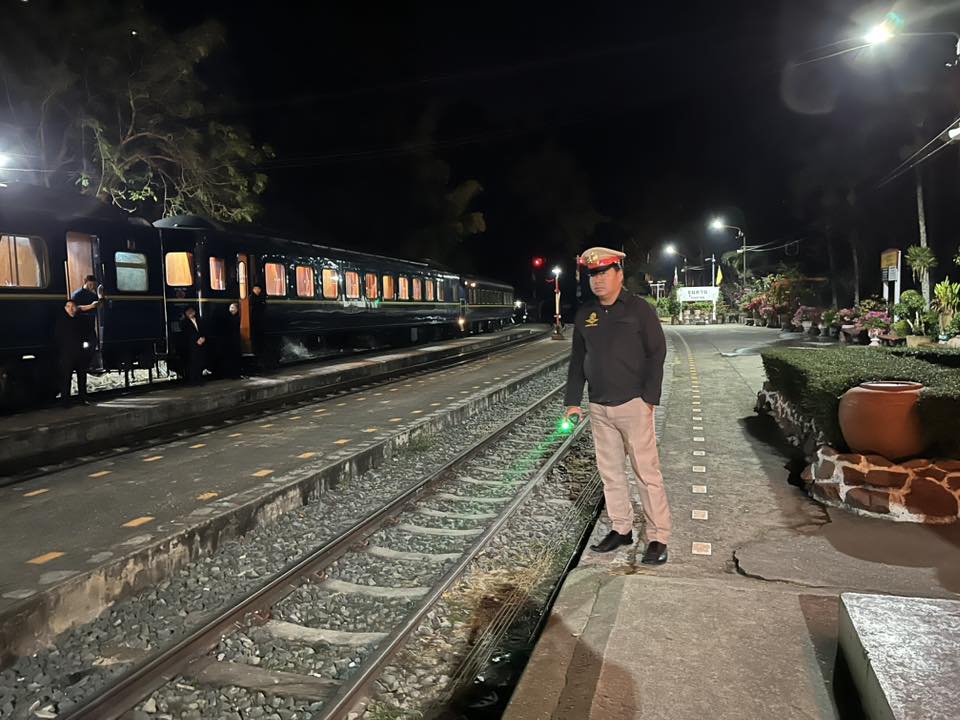
At 5 a.m., The Blue Jasmine pulls into Khun Tan station. This station is highly symbolic. It is the highest railway station in Thailand, and above all it sits at the exit of the Khun Tan Tunnel, marking a major geographical threshold: the transition from the historic north around Chiang Mai to the Lampang valleys, opening toward the central plains and Bangkok.
© Discovery Trains
A stop in the heart of the mountains
The sun has not yet risen and most passengers on the premium train are still asleep in their comfortable compartments, but the station is already alive. A few shops have lit their first lanterns, SRT staff from Thailand’s national railway are chatting, and the station master is alert. Two trains are due to arrive, one in each direction. The Blue Jasmine has pulled aside to clear the tracks. Movements in and out have to be carefully watched.
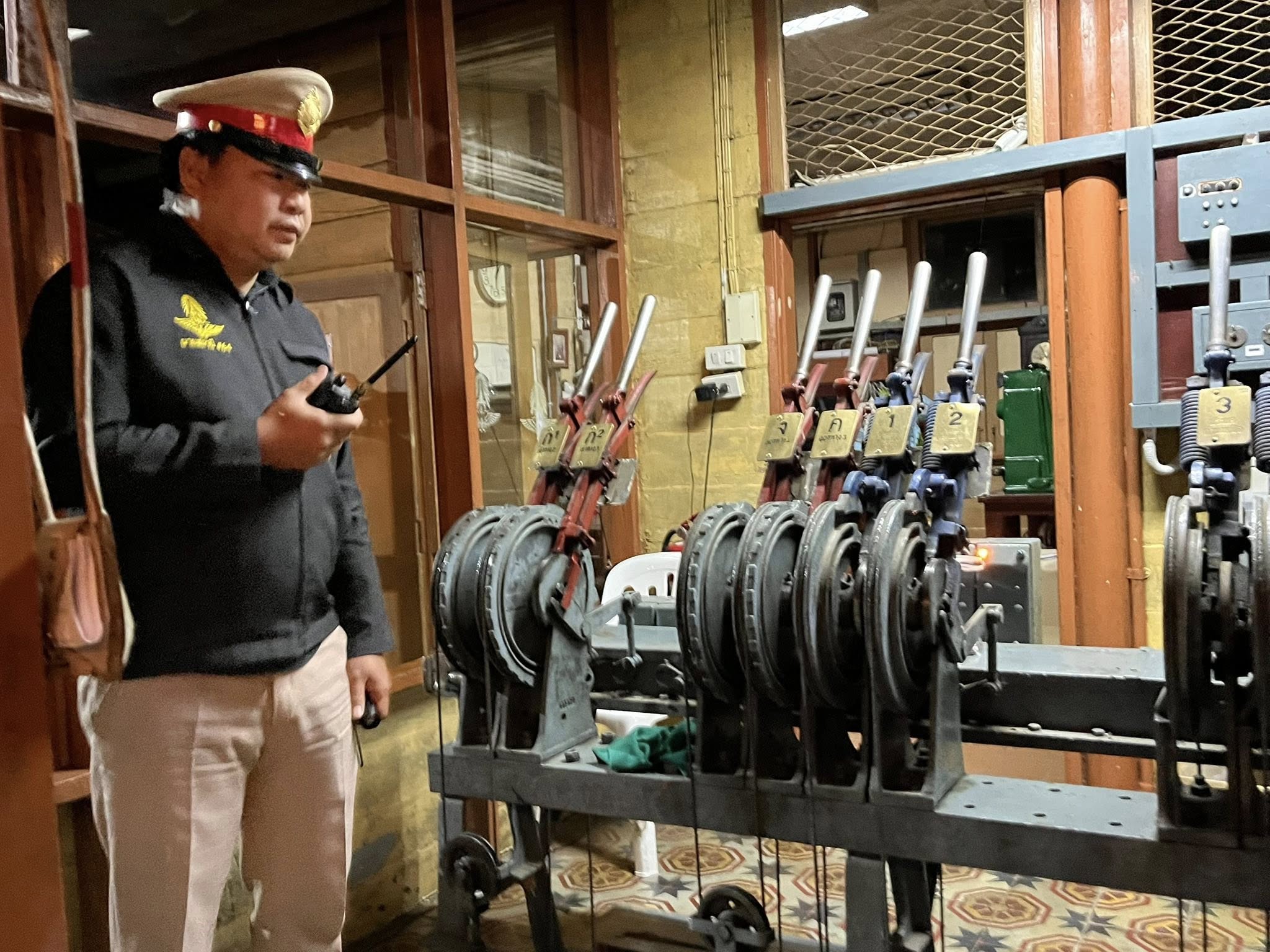
An impressive mechanical system is housed in a small building near the tracks. This is the signal box.

© Discovery Trains
Its door is framed by two royal portraits. On the right, the Queen Mother, deeply revered by the Thai people and recently deceased; on the left, the young king. Inside, heavy levers control the movement of the tracks. The one that must be raised after the train passes is marked with a red cloth.
© Discovery Trains
A few passengers decide to step outside despite the early hour, stretching their legs on the platform. A butler in white gloves brings a coffee. In the distance, the red lights marking the entrance to the tunnel shimmer.
“Over there, there’s a small shrine dedicated to a warrior,” explains Thana, our guide. “People bring offerings.”
A first shrine along the tracks
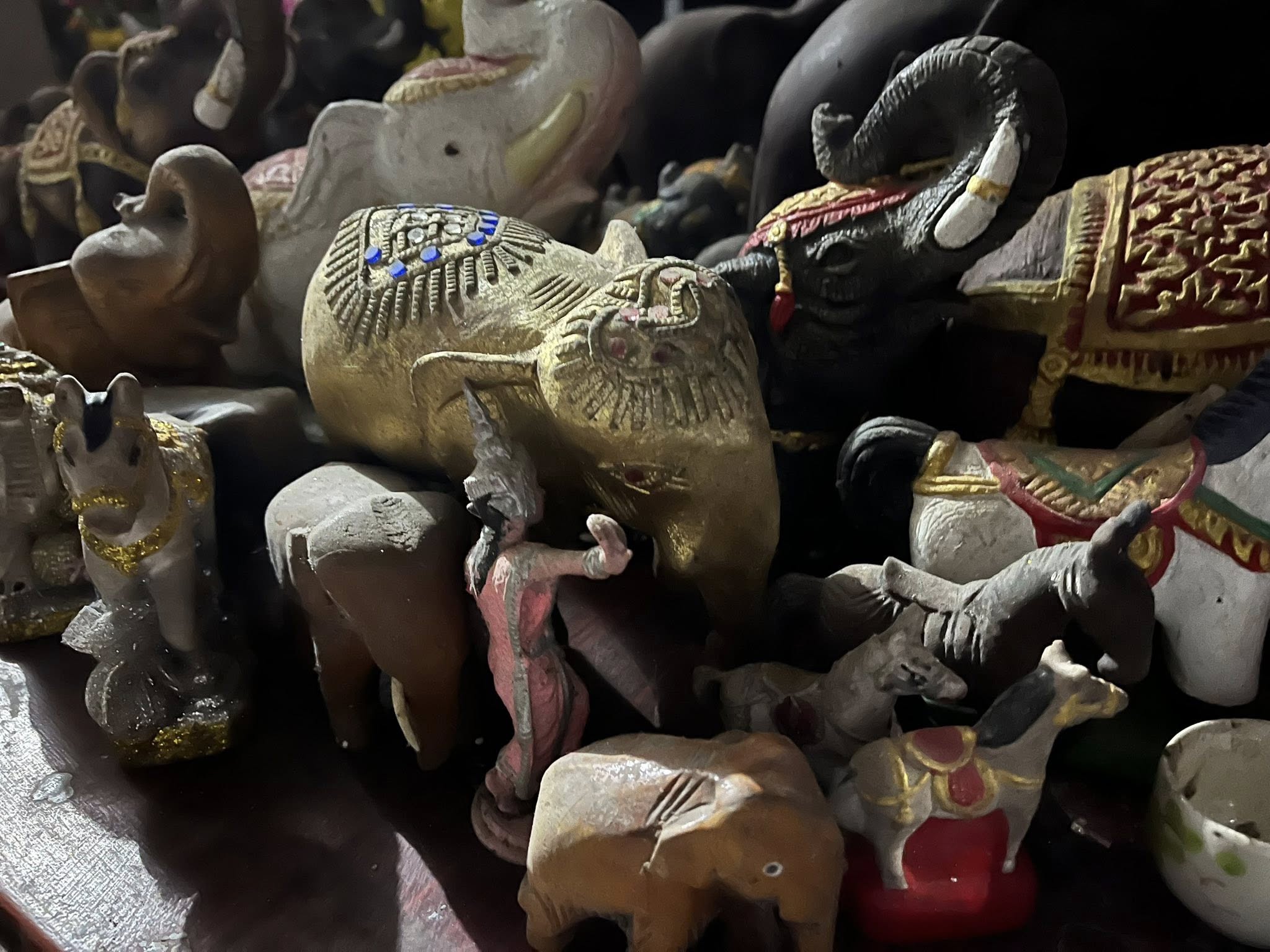
I decide to follow the rails through the dim light to take a closer look at this small sacred site. A little further along the platform, an altar appears, covered with roses, carnations, and dozens of votive figurines: elephants, horses, roosters.
“Visitors bring flowers and make a wish. If it comes true, they return with a figurine,” Thana explains.
© Discovery Trains
Toward the warrior’s shrine
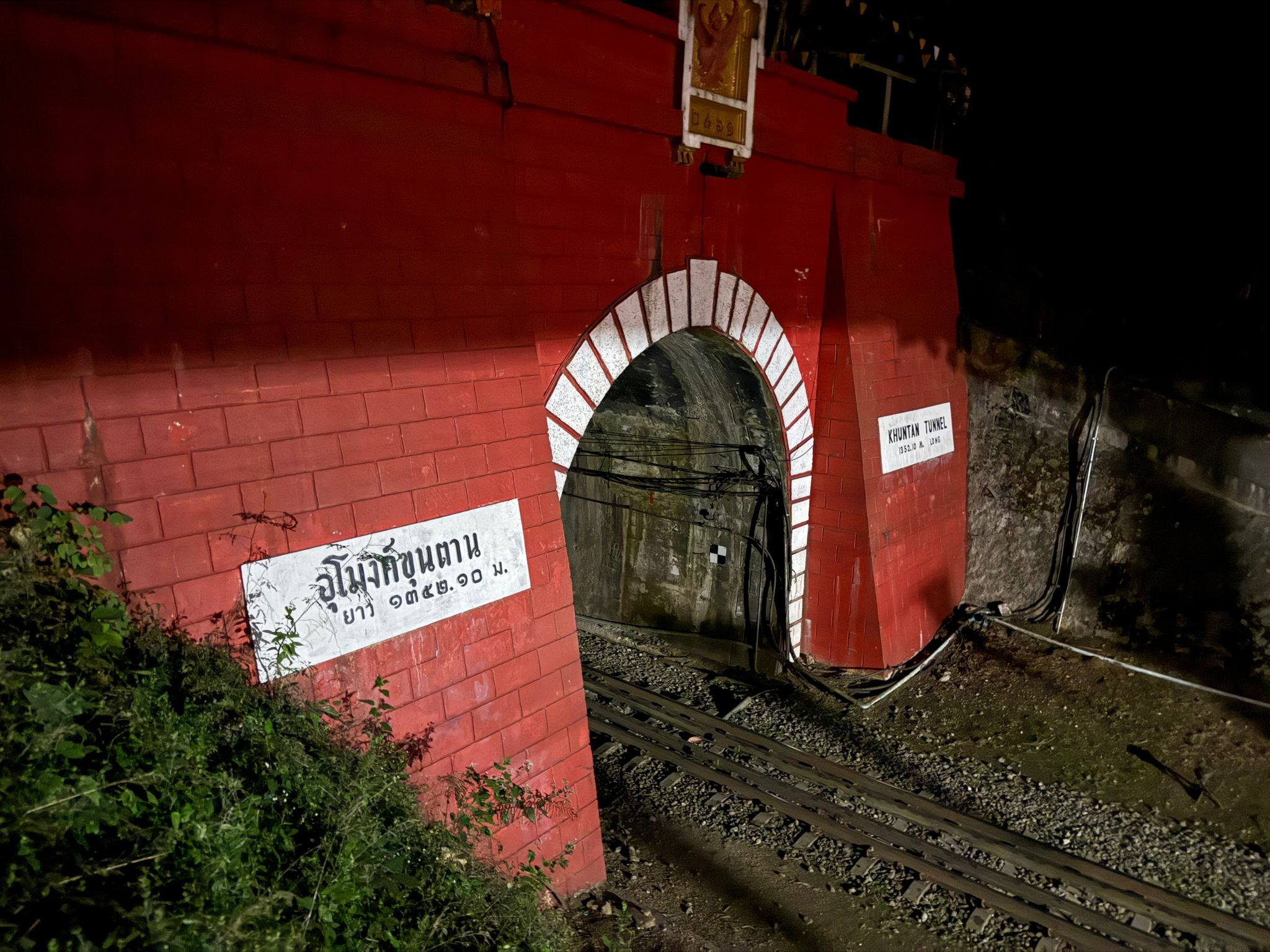
But the warrior’s shrine lies higher up. We pass the entrance to Doi Khun Tan National Park, watched over by two wooden guardians in uniform, and start to climb. On the right, the tunnel entrance looks freshly repainted, and an inscription notes its length: 1,352.10 meters. Until recently, it was the longest railway tunnel in Thailand.
© Naronglit (Jack) - DTH
A first golden statue, resembling a Buddha, is adorned with a warm red garland, while colorful pennants give the place a festive, gentle, and joyful feel in the heart of the darkness. A blue sign, written in elegant Thai script, explains to worshippers what they should do and what they may ask of the spirit.
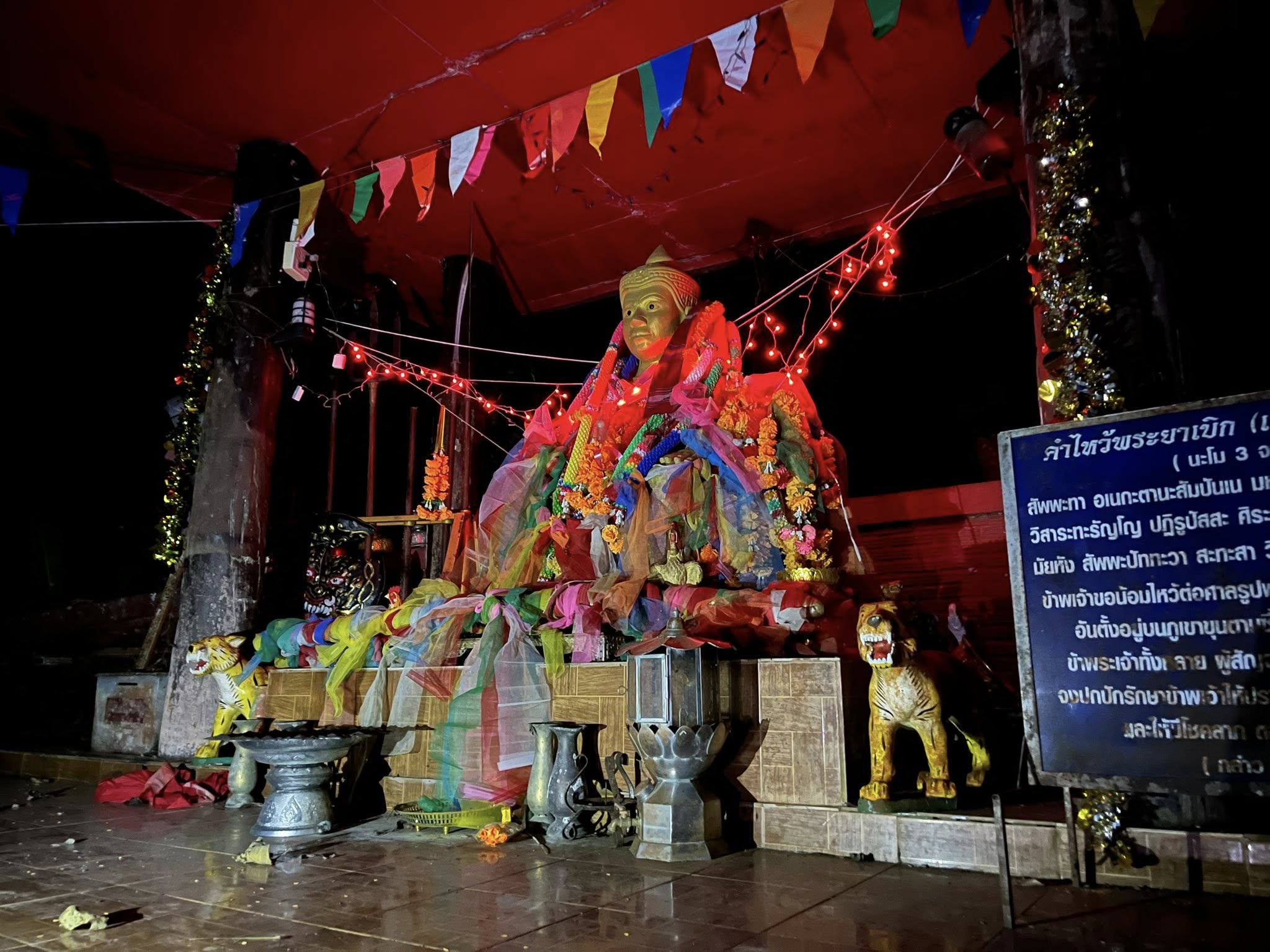
© Discovery Trains
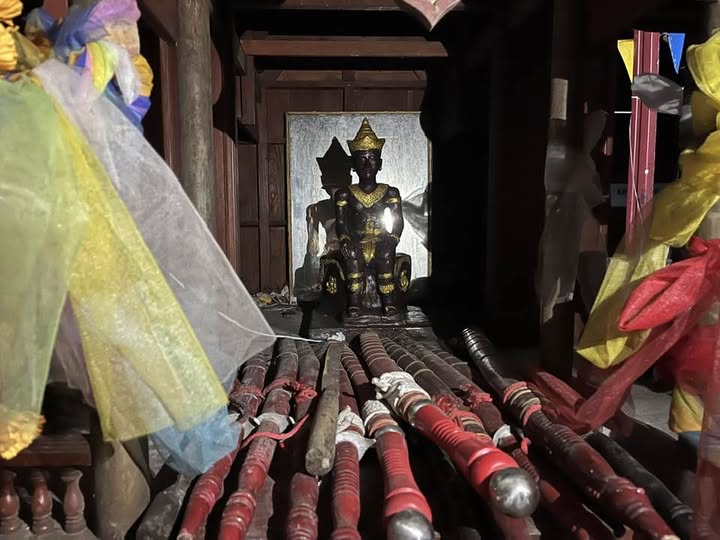
Further on, colored ribbons signal the presence of a small alcove. This is where the hero, Chao Pho Khun Tan, is enshrined.
Legend has it that during the wars of conquest at the end of the 13th century, this warrior defended the Khun Tan pass. He fought with such bravery that he seemed possessed by a supernatural strength. Unable to defeat him by force of arms, his enemies are said to have ultimately buried him alive. The shrine now marks the place where he was entombed.
© Discovery Trains
Here too, offerings have been laid out. This time they are weapons: fine knives in red sheaths, their chrome handles catching the beam of our lamp. Among them, one can even spot an ordinary kitchen knife. Khun Tan has become a protective spirit for travelers and for this mountain pass; people come here to ask for his protection.
Piercing the mountain
Centuries later, when the railway tunnel was driven through terrain considered dangerous, a belief took hold that the spirit of Khun Tan, watching over the site, had helped ensure the success of the project. The tunnel was finally opened in 1918, after some eleven years of remarkable construction work.

© Discovery Trains
We now make our way back down toward the platforms. The Blue Jasmine’s panoramic car, with its open balcony, stands out like a beacon in the night. During our short excursion, the first train has passed and the second is approaching. Below, SRT staff are waiting. One of them strokes a dog wagging its tail. I notice that another dog wandering along the platform has only three legs — a small reminder that it’s best not to get too close to the tracks.
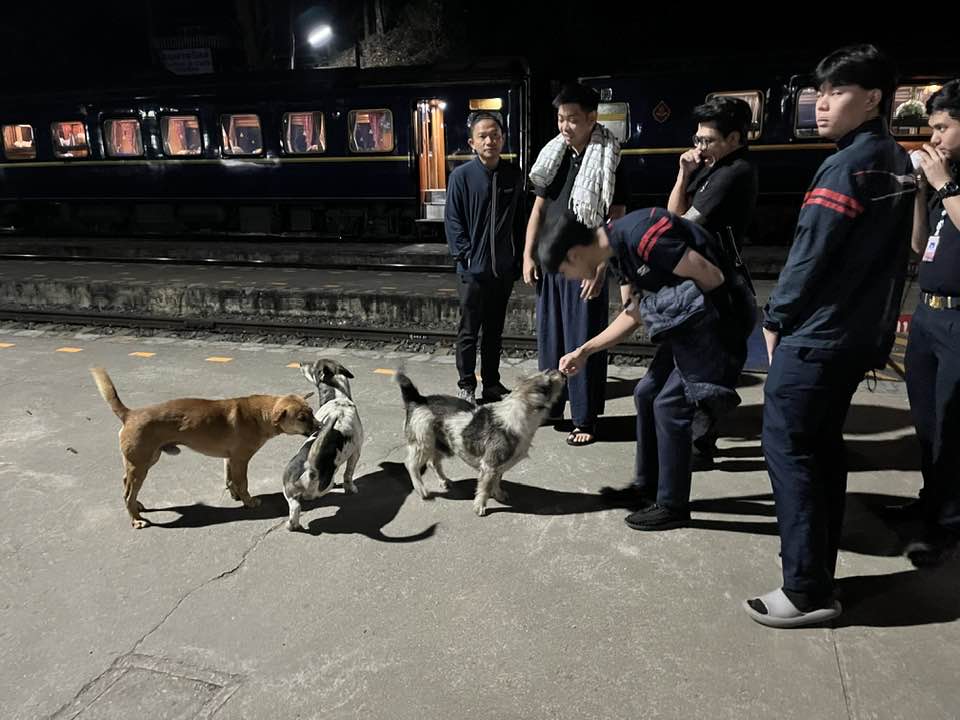
© Discovery Trains
Life behind the windows
At last, the second train arrives. Its light appears at the far end of the tunnel, and you can sense it slowing as it approaches. The carriages roll past us, giving us time to glimpse the life unfolding inside, framed by illuminated windows like a sequence of comic-strip panels. Here, a team of conductors is finishing a briefing. There, women are tidying their belongings. Elsewhere, two young boys are putting on makeup. I have already noticed on our own train that a few male crew members are also discreetly made up.

© Discovery Trains
The pleasure of returning aboard the Blue Jasmine
Once the train has passed, I finally make my way back to The Blue Jasmine, as departure is close. On board our train as well, the day is already in full swing. Through the window, I catch sight of our young chef, Khun Patipat, hard at work. He jokes with his sous-chef, but his hands move quickly and his focus never wavers. He is preparing a delicious omelet that, in just a few minutes, will be served to The Blue Jasmine’s fortunate travelers. It’s time to step back on board.

© Discovery Trains
Article written by Laure Jacquet,
Laure Jacquet, Managing Director of Discovery Trains, a rail-travel specialist agency
Discover our special train journeys in Thailand
