

Hua Lamphong Station, Bangkok’s Railway Memory
Monday 2 February 2026 | Train Travel in Thailand | An Iconic Railway Station
Once Bangkok’s main railway station, Hua Lamphong blends light, architecture, and rail history. A place rich in meaning, where the tracks still tell the story of the kingdom’s independence.
Today, Hua Lamphong Station welcomes the premium Blue Jasmine train. Until 2023, it was one of Bangkok’s main railway hubs, handling the daily flow of thousands of commuters. Since the opening of the new Krung Thep Aphiwat Central Terminal, Hua Lamphong has been largely relieved of mass transit traffic.
It has, however, retained a key role: hosting special and heritage trains. And that is very good news. This grand early-20th-century station offers an exceptional setting of light and space for remarkable locomotives.
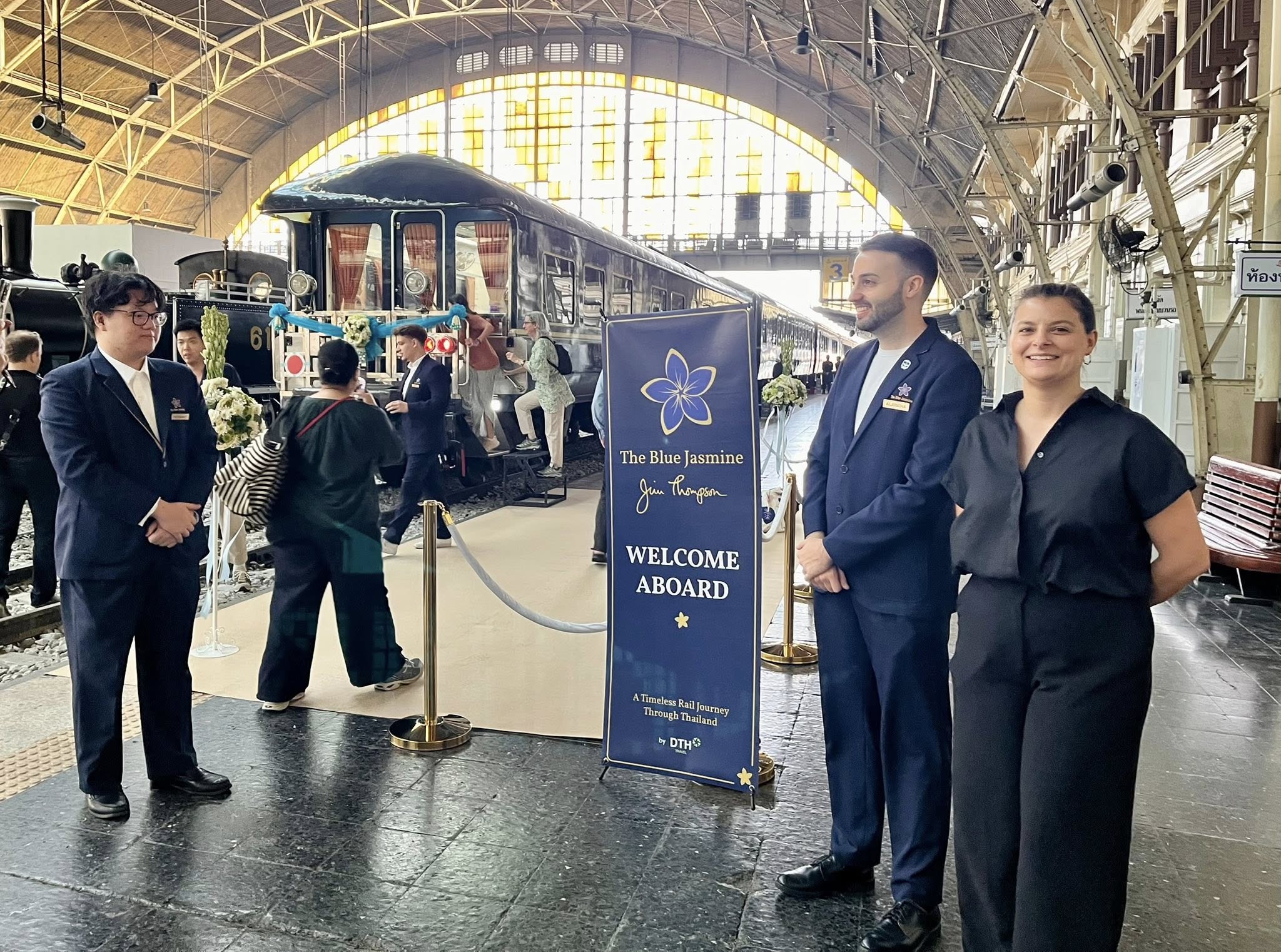
The Blue Jasmine team prepares for departure © Discovery Trains
Even though it no longer plays a central role in Thailand’s rail network, Hua Lamphong Station remains a powerful urban symbol in Bangkok. Built in the early 20th century at the initiative of King Rama V (Chulalongkorn), it can be read as a statement of strength and independence for Thailand, then still known as the Kingdom of Siam.
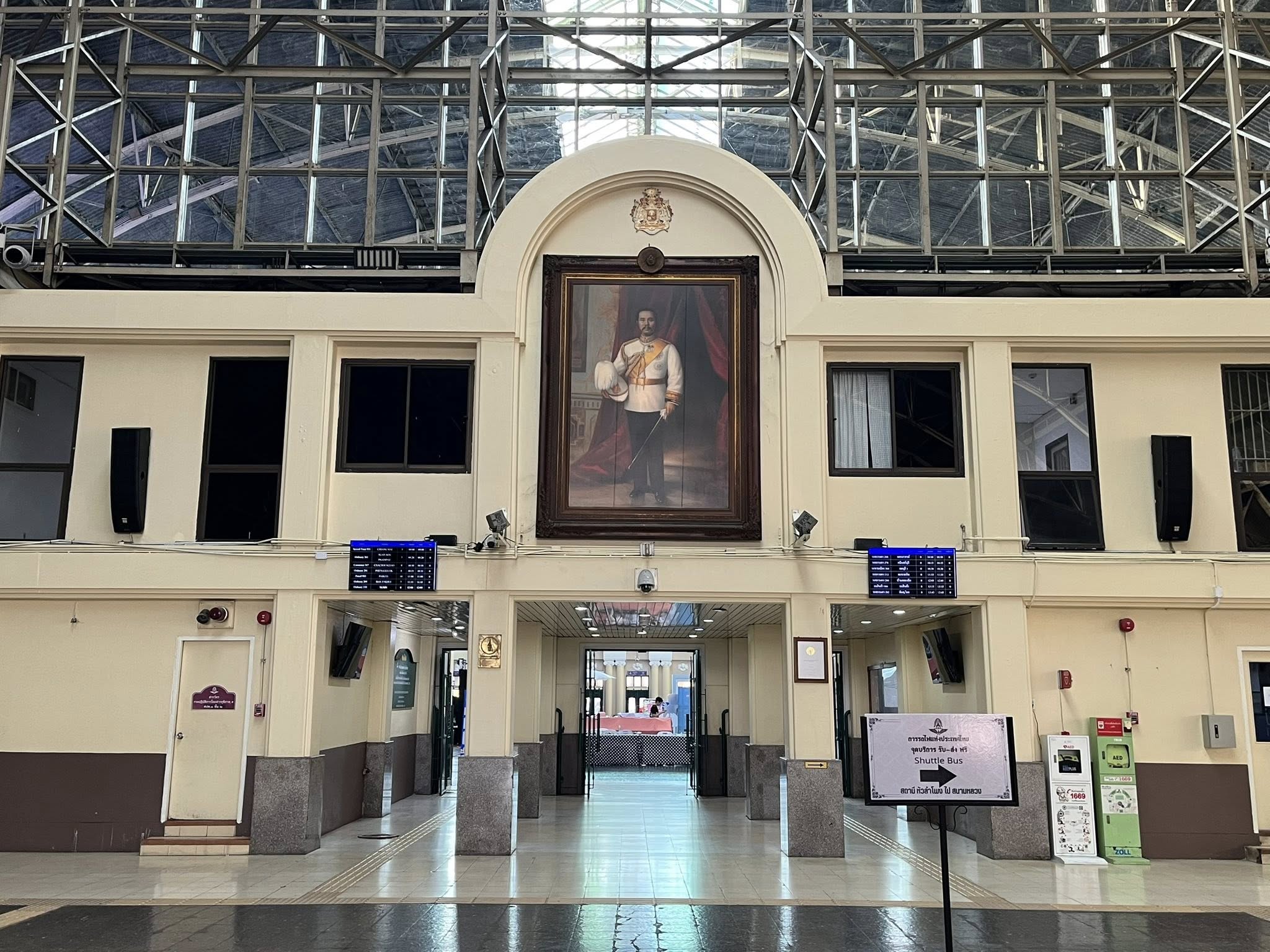
King Rama V, father of Thailand’s railway system — arrivals hall © Discovery Trains
Thailand is indeed the only country in Southeast Asia that was never colonized. At the time, the British controlled Burma and Malaya, while the French administered Indochina—Vietnam, Laos, and Cambodia. At the turn of the 20th century, colonial ambitions were particularly strong. Yet Rama V (Chulalongkorn) succeeded in preserving the sovereignty of his kingdom, notably through an active policy of state modernization, institutional reform, and infrastructure development.
Railways played a central role in this strategy. A well-traveled monarch, Rama V made several journeys to Europe, where he closely observed how rail networks helped unify territories and drive economic development. He quickly understood the importance of a railway system to connect the regions of the kingdom and assert central authority. Although he did not live to see the completion of the station—officially inaugurated in 1916 under the reign of his son Rama VI (Vajiravudh)—the momentum initiated by Rama V was decisive in the emergence of Thailand’s railway system.

Historic photographs of the station © Discovery Trains
Inside the station, the portrait of this highly respected king still greets travelers. To reach the platforms, passengers pass beneath the great central arch and meet his calm, direct gaze, set high above—like a watchful presence overseeing the space.
From the departure hall, he appears surrounded by his descendants, including the current king, Rama X (Maha Vajiralongkorn), and his father. From the platforms, however, Rama V (Chulalongkorn) stands alone, silently watching over departing travelers.

King Rama V surrounded by the current king and his father, with their spouses — departure hall © Discovery Trains
To design Hua Lamphong Station in the early 20th century, the royal authorities turned to two Italian architects, Mario Tamagno and Annibale Rigotti, leading figures of official architecture in Siam at the time. They were also responsible for several major buildings that still shape Bangkok today, including the Ananta Samakhom Throne Hall.
Hua Lamphong Station nonetheless stands out as one of their most accomplished and enduring works.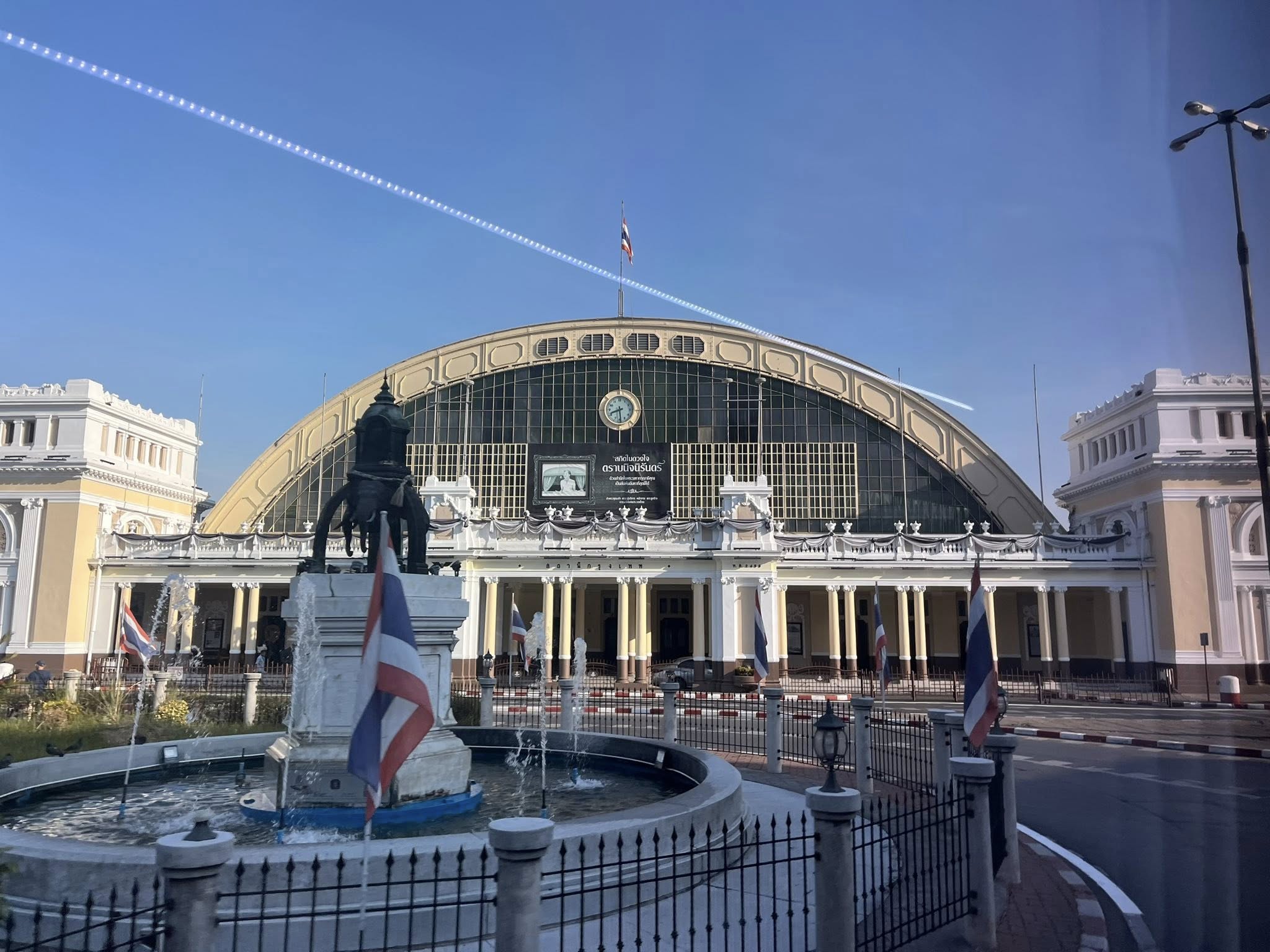
Hua Lamphong Station, exterior view © Discovery Trains
Its architecture draws on Italian Renaissance inspiration, combined with European Beaux-Arts principles and modern railway engineering. It is generally accepted that the architects looked to major European stations of the late 19th century for inspiration, notably Frankfurt Hauptbahnhof.
Both buildings feature a vast, single-span metal arch, flanked by more massive lateral volumes, designed to cover a broad hall without intermediate supports.

Departure hall © Discovery Trains
The Thai station nonetheless asserts a brighter, more contemporary identity. It stands out in particular for its striking stained-glass windows. Inside, two large stained-glass openings dominate the space, filtering the light in green tones in the departure hall and waiting areas, and in warmer, amber hues in the main arrivals hall. On sunny days, a golden light floods the building, transforming it into an almost contemplative space.
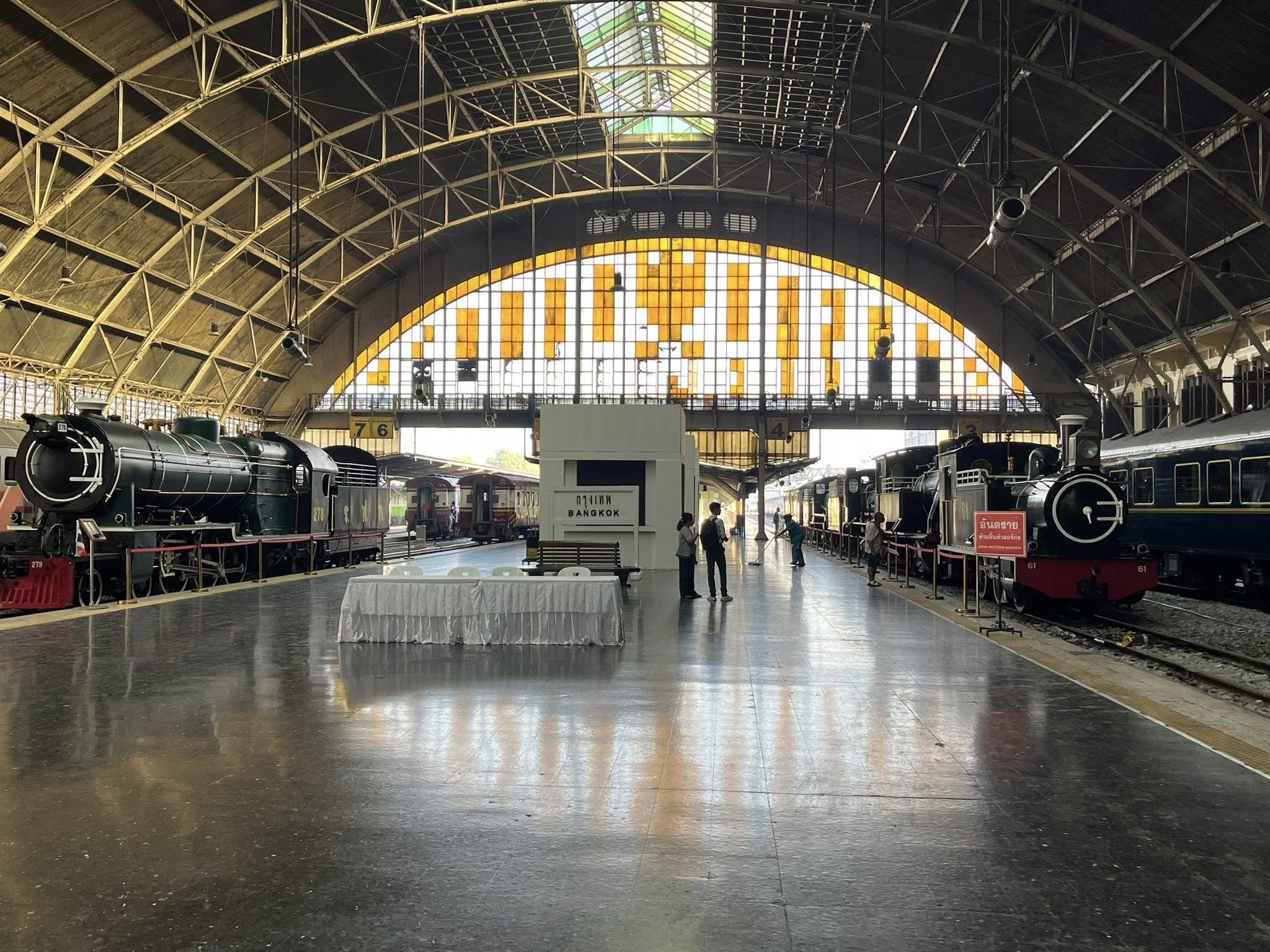
Arrivals hall © Discovery Trains
Hua Lamphong Station is not a ghost station. A few suburban trains still call here, and two historic locomotives have been preserved on the platforms, offering a tangible reminder of the site’s railway past.
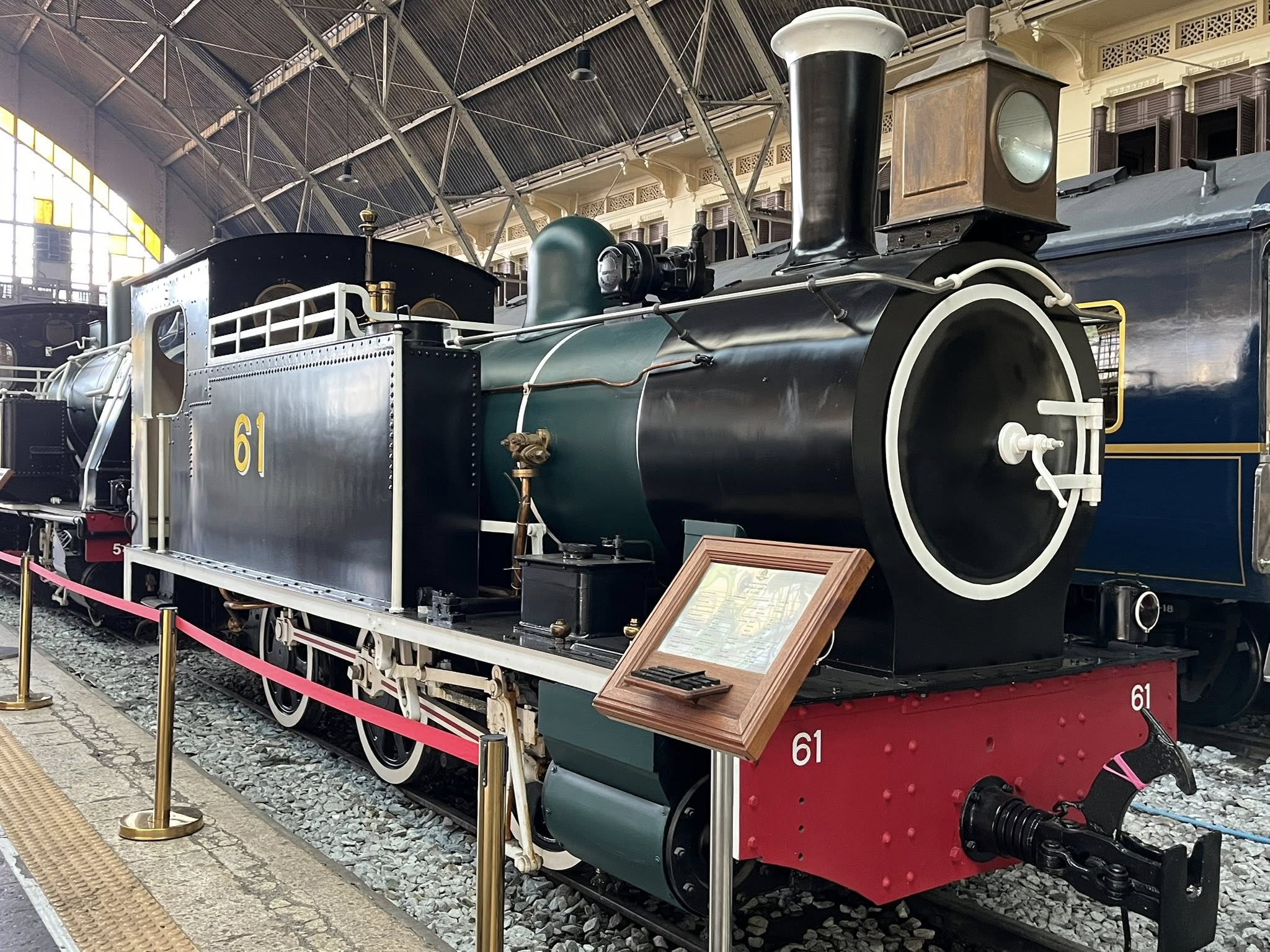
State Railway of Thailand steam locomotive No. 61, introduced in the early 1910s and in service on the Siamese rail network until the mid-1960s © Discovery Trains
If you travel by train in Thailand today, it is unlikely that your route will pass through Hua Lamphong Station. But if your schedule allows, the visit is well worth the detour: to admire the stained glass, to experience the quality of light that fills the space, and to acknowledge the steady gaze of Rama V (Chulalongkorn), a king who believed deeply in the power of the railway.
