

8 things to know before your train journey in thailand
Monday 2 February 2026 | Train travel in Thailand | Traditions
From grilled bananas to gold leaf offerings and gestures best avoided, this small Thai primer may come in handy on your next journey.
If you’re planning a train journey in Thailand, Discovery Trains offers this short guide to help decode eight surprising—or simply fun—local details you’re likely to encounter.
1 – Transport: tuk-tuks
They are everywhere, in every city. These small open vehicles, usually with three wheels, are perfect for weaving through traffic.
Their design varies from one region to another. In Ayutthaya, for instance, their slightly pointed shape gives them a faintly frog-like look. Many are fitted with powerful speakers: you can ask the driver to turn up the music… at your own risk, as the volume can be impressive.

Tuk Tuk in Ayutthaya © Discovery Trains
2 – Gastronomy: small bites
As an aperitif—or sometimes even as a dessert—Thais prepare small bites known as miang kham. They are served on a cha plu leaf (wild betel leaf).
The leaf acts as a natural base, topped according to taste with tiny amounts of sweet, salty, tangy, and often spicy ingredients. A playful and very local way of snacking.

© Discovery Trains
3 – Dessert: seasoned fruits
In Thailand, fruit is often eaten raw. At markets, you’ll find small containers filled with a sweet, salty, and spicy seasoning. Green mango, guava, or jackfruit that is still underripe are dipped into this mix before being eaten.

© Discovery Trains
Much like strawberries sprinkled with sugar or a tomato eaten with a pinch of salt—just with a tropical twist. Bananas, meanwhile, are sometimes simply grilled in their skins over a barbecue.

© Discovery Trains
4 – Attitude: don’t point with your feet
In Thailand, pointing at someone with your foot is considered impolite—whether the person is human or a deity.
In temples, when you sit to observe or take part in a prayer, avoid stretching your legs out toward the altar. Instead, fold them to the side or sit cross-legged, as a sign of respect.

© Discovery Trains
5 – Piety: wishes in gold
In Thailand, you may come across gold-covered statues with a sometimes surprising, almost shapeless appearance. This look has nothing to do with their original design. It is the result of a widespread practice: over time, worshippers apply thin sheets of gold leaf to the surface of a statue to accompany a wish or a prayer.

© Discovery Trains
Year after year, these leaves build up layer by layer, gradually covering the original details and reshaping the figure. The gold becomes the visible trace of countless acts of devotion.

Gold and silver leaf on a potter’s kiln © Discovery Trains
The same principle can sometimes be seen outside temples: a potter may place a sheet of gold leaf on a kiln, or a goldsmith on a workbench. A discreet gesture meant to place one’s work under favorable auspices.
6 – Spirits: shrines at doorways
In front of houses, hotels, shops—and even some bridges—you’ll often see small shrines raised on a single pillar, resembling oversized birdhouses.

Spirit shrine in front of a house © Discovery Trains
These shrines are dedicated to the protective spirits of the place. Offerings of flowers, food, and incense are left here. Some follow a specific theme: at the entrance to this bridge, toys and small sandals have been placed. Local residents believe the spirit of the bridge is that of a child, and they tailor their offerings accordingly.

Spirit shrine by a bridge, with children’s toys © Discovery Trains
7 – Aesthetics: curved fingers
Traditional Thai dance is immediately recognizable for its highly codified gestures, especially in the hands. The fingers are strongly curved backward.
Length and flexibility of the fingers are seen as signs of beauty. From a young age, girls practice to increase the suppleness of their hands. During performances, long nails incorporated into the costumes further accentuate the elegance of the movement.

Traditional Thai dance © Discovery Trains
8 – Colors: one for each day
In Thailand, each day of the week is associated with a color. The color linked to your day of birth is considered lucky and may influence everyday choices. Monday is associated with yellow (protection and stability), Tuesday with pink (energy and determination), Wednesday with green (balance and communication), Thursday with orange (knowledge and wisdom), Friday with blue (harmony and relationships), Saturday with purple (endurance and discipline), and Sunday with red (vitality and authority).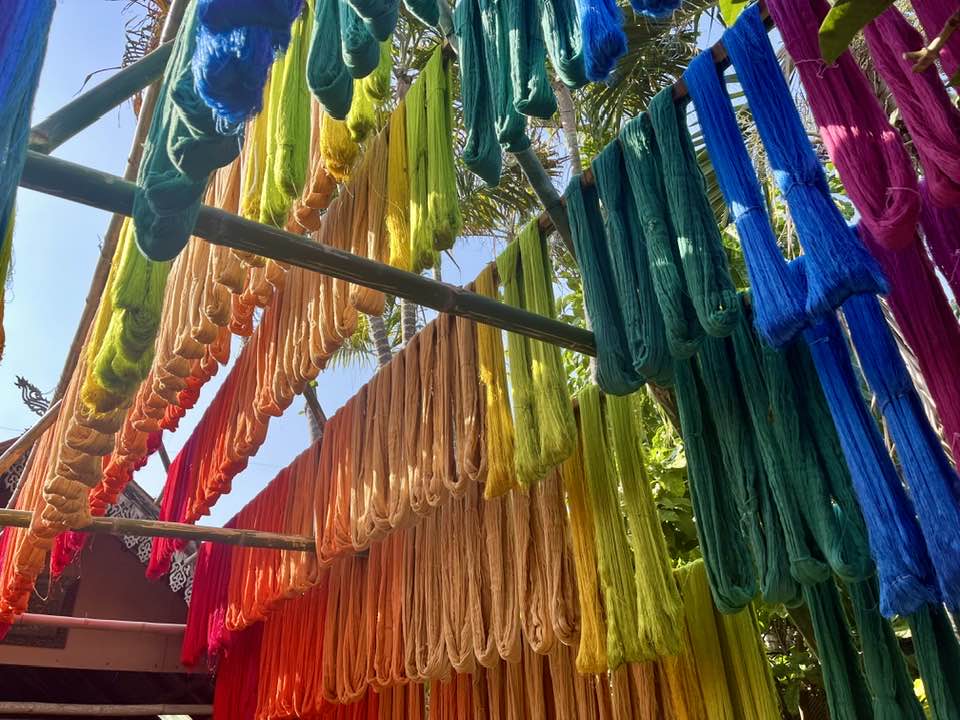
© Discovery Trains
All Thais know the birth day of the current king, Rama X, who was born on a Monday - a day associated with the color yellow. This is why you will so often see yellow flags displayed alongside the Thai national flag, as a sign of respect for the monarchy.
This article was written by Laure Jacquet,
Director of the rail travel specialist agency Discovery Trains.
